
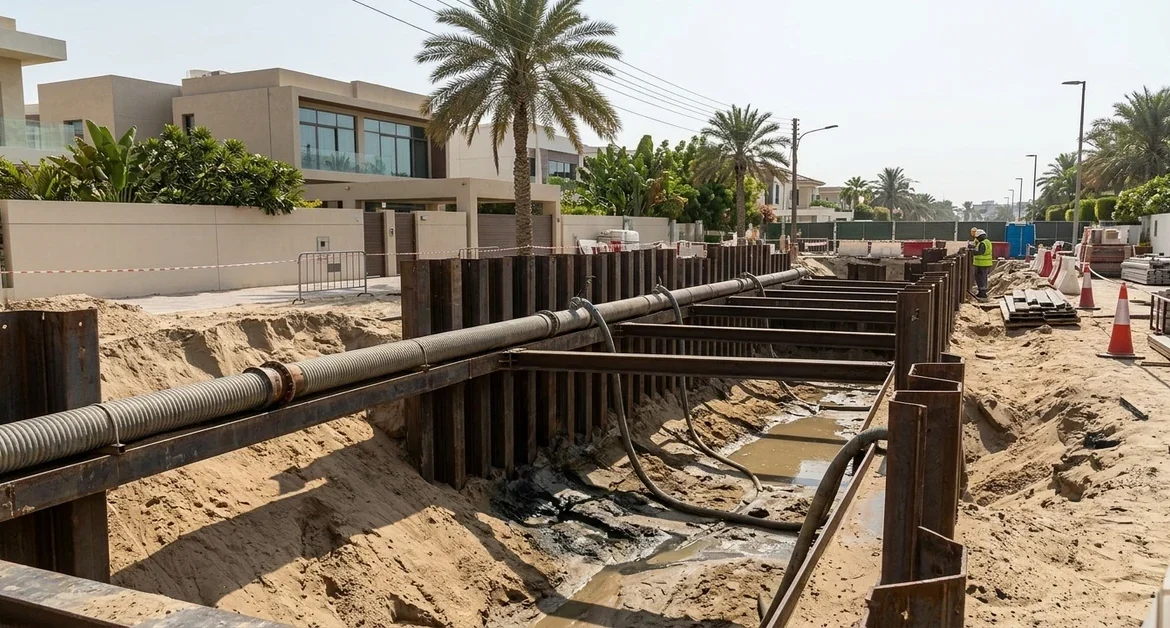
Quick answer: Cut-and-fill site levelling reduces Dubai construction costs by moving clean excavated dune sand from high areas of a plot to fill low spots instead of paying twice for off-site disposal and imported backfill. Only contaminated soil, salty sabkha, clay, or debris-mixed sand must be hauled away.
Cut-and-fill site levelling lets you reuse good excavated sand on your own plot instead of paying to haul it away and buy new fill. Here is how it works and when it is the right choice in Dubai.
Many Dubai villa plots and commercial yards sit slightly below road level or slope unevenly from front to back. Paying a trucking company to haul away thirty loads of clean sand from a foundation cut—only to pay another supplier two weeks later to deliver thirty loads of imported fill sand—is pure wasted budget. When our clients bring in excavation contractors in Dubai, balanced cut-and-fill site levelling is one of the smartest ways to cut both trucking bills and project timelines.
How Cut-and-Fill Works
In a cut-and-fill operation, the surveyor marks target elevations across your plot so soil excavated from high zones or foundation trenches (‘cut’) is pushed, graded, and compacted directly into low-lying areas (‘fill’). Clean, fine-grained inland Dubai dune sand makes excellent general backfill once watered and compacted in 250mm to 300mm layers using a vibrating roller or plate compactor.
When Excavated Soil Should Be Hauled Away
However, not all excavated ground should be reused under slabs or interlock paving. If digging uncovers high-salinity coastal sabkha, soft silt, organic garden roots, or sand mixed with old concrete rubble and plastic waste, that material will hold moisture and settle unevenly over time. Poor-grade or debris-contaminated soil should always be separated on site, loaded by bobcat into tippers, and hauled to an approved Dubai Municipality facility while clean sand is reserved for grading.
Excavator and Bobcat Teamwork on Site
At Ejaz & Asif Transport L.L.C, pairing an excavator with a mini bobcat skid steer makes on-site grading fast and accurate. While the excavator digs footings or reduces high sand mounds, the bobcat spreads the clean fill evenly across the plot to within a few centimeters of final grade—and any net surplus soil is hauled off-site on the very same day.
Is Cut-and-Fill Site Levelling Right for Your Plot?
Cut-and-fill site levelling works best when:
- The excavated material is clean sand without rubble, roots or contamination.
- The plot has low areas that need raising close to where the sand is dug.
- Your engineer confirms the material is suitable for the planned slabs or paving.
- Fill can be placed and compacted in layers to the specified levels.
If the soil is unsuitable, it should be removed and replaced with approved fill. Ask for a level survey before and after the work so the finished grades match the drawings. For general guidance on construction materials and site work in the emirate, refer to the Dubai Municipality. Done properly, cut-and-fill site levelling saves both trucking and material costs.
Need a fast, transparent quote in Dubai? Contact Ejaz & Asif Transport L.L.C at our Al Quoz 3 office on (050) 854 1740 or WhatsApp us your site location and photos, or explore our Excavation Contractors Dubai service page for full scope details.
Frequently Asked Questions
When can excavated sand be reused for backfilling in Dubai?
Clean, salt-free dune sand free of rubble, roots, and clay can be reused for plot levelling and trench backfilling when watered and compacted in 250mm to 300mm layers.
What type of excavated soil must be removed from a Dubai site?
Salty coastal sabkha, wet silt, organic topsoil containing tree roots, and sand mixed with construction debris should be hauled off-site rather than buried under slabs or paving.
How much money can cut-and-fill levelling save on a villa project?
Reusing 100 cubic meters of clean on-site sand instead of hauling it away and buying new fill typically saves 10 to 14 tipper trips plus material purchase costs.