
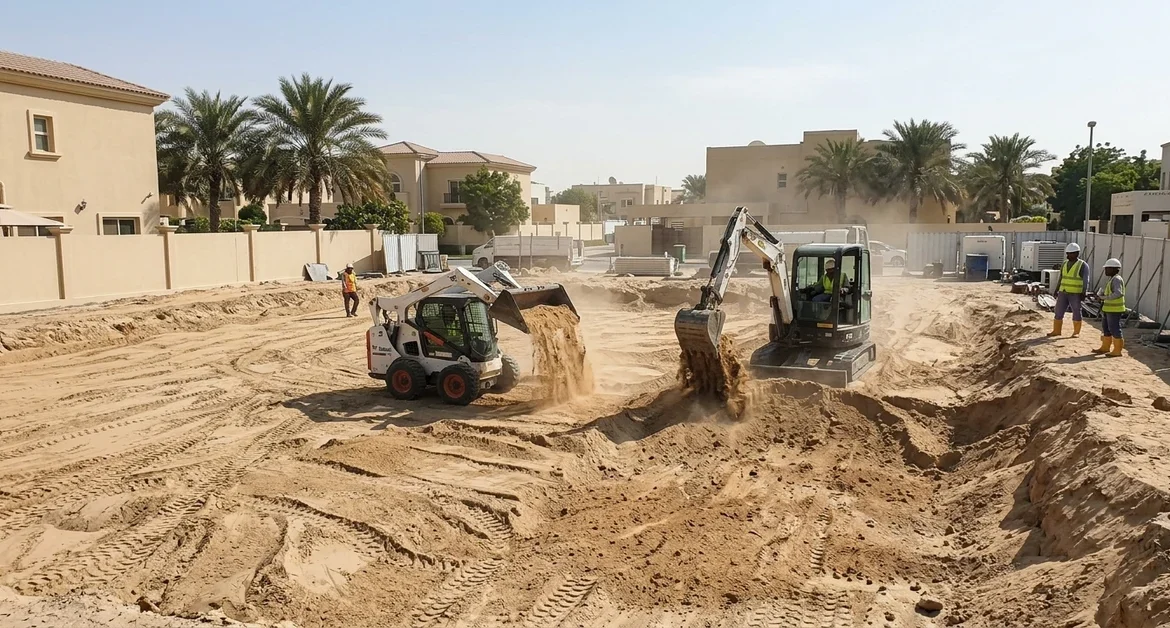
Quick answer: Use a hydraulic breaker attachment on a mini excavator when demolishing reinforced concrete slabs, pool shells, or rocky calcrete ground. Switch to a narrow 300mm–600mm toothed bucket for digging utility and irrigation trenches, and a wide toothless grading bucket for smooth sand levelling and backfilling.
Choosing between a hydraulic breaker vs trenching bucket decides how fast a mini excavator gets through your job. Here is when each attachment is used and when you need both on site.
A mini excavator is only as productive as the tool pinned to the end of its boom. Sending a machine out with a wide standard soil bucket when your crew actually needs to cut through a 150mm concrete driveway—or trying to dig a neat 35cm irrigation line with an oversized 90cm bucket—wastes hours of billable machine time. When booking mini excavator rental in Dubai, specifying the exact ground surface lets us load the right attachments onto the transport truck before dispatch.
When to Use a Hydraulic Breaker
1. Hydraulic Rock Breaker (Jackhammer Attachment): Essential whenever you encounter cured concrete, asphalt driveways, ceramic-tiled pool walls, or hard desert calcrete caprock. Rather than straining the excavator’s bucket teeth and hydraulic cylinders, a breaker delivers high-impact percussion blows that fracture concrete slabs cleanly into manageable chunks ready for bobcat loading.
When to Use a Narrow Trenching Bucket
2. Narrow Trenching Buckets (300mm, 450mm, and 600mm): Built with hardened digging teeth, narrow buckets are the go-to choice for laying DEWA electrical conduits, irrigation pipes, garden drainage lines, and villa boundary wall footings. Digging a trench closer to the exact pipe width reduces the volume of sand you have to excavate, backfill, and compact afterward.
When to Use a Wide Grading Bucket
3. Wide Grading / Ditch-Cleaning Bucket (1,000mm–1,200mm): Featuring a smooth, toothless cutting edge, a grading bucket levels loose sand, strips grass turf cleanly, and backfills trenches without snagging buried pipes or cables. On renovation sites that require breaking old concrete first and digging utility trenches second, our operators bring both the hydraulic breaker and digging buckets on the same delivery truck and swap them on site in under ten minutes.
Hydraulic Breaker vs Trenching Bucket: Quick Decision Guide
- Breaking concrete, asphalt or hard caprock: hydraulic breaker.
- Digging cable, pipe or irrigation trenches: narrow trenching bucket in the width you need.
- Levelling sand, stripping turf or backfilling: wide grading bucket.
- Pool or slab demolition followed by digging: book both, so the operator can switch on site.
Tell your rental supplier the material you will meet and the trench width required, so the correct tools travel with the machine. Swapping tools takes minutes when both are on site, but hours if one has to be delivered later. For trenching near public utilities, check service clearance requirements with the relevant authorities, including DEWA. Getting the hydraulic breaker vs trenching bucket choice right at booking saves time and money.
Need a fast, transparent quote in Dubai? Contact Ejaz & Asif Transport L.L.C at our Al Quoz 3 office on (050) 854 1740 or WhatsApp us your site location and photos, or explore our Mini Excavator Rental Dubai service page for full scope details.
In short, the hydraulic breaker vs trenching bucket decision depends on the material in front of the machine: hard concrete needs the breaker, soft ground needs the bucket.
Frequently Asked Questions
Can a mini excavator break reinforced concrete slabs in Dubai?
Yes. When fitted with a hydraulic breaker attachment, a 2-ton to 3.5-ton mini excavator easily breaks residential concrete driveways, patios, boundary footings, and swimming pool shells.
Can I get both a breaker and a digging bucket on the same rental?
Yes. Tell our dispatch team in advance if your job involves both concrete breaking and soil trenching, and we will send both attachments with the machine.
What bucket width is best for villa irrigation and cable trenches?
A 300mm (12-inch) or 450mm (18-inch) toothed trenching bucket is ideal for residential plumbing, electrical conduits, and landscaping drainage lines.